Spaces That Communicate

Perspectives on the art of designing spaces that inform, engage, and perform.

Welcome to ItriaMedia

Latest Insights

Practical perspectives on A/V, digital signage, AI, and the business of selling and operating modern communication spaces.

AI-driven digital signage content management

How AI Is Rewriting the Rules of Digital Signage Content

For decades, digital signage meant scheduled playlists — content uploaded once, looped endlessly. AI is dismantling that model. Today's intelligent displays can analyze real-time data streams — foot traffic sensors, weather APIs, POS transactions, social sentiment — and autonomously generate or select content that fits the moment. A quick-service restaurant can shift its menu board from breakfast upsells to lunch combos the instant the morning rush tapers. A retail wall can surface the jacket that's trending on social the same hour it goes viral. This isn't just automation; it's signage that thinks.

Contextual digital signage adapting to audience

Context Is the New Creative: Right Message, Right Screen, Right Second

The most expensive signage mistake isn't a broken screen — it's an irrelevant one. Contextual signage flips the question from "what should we show?" to "what does this person need right now?" That shift requires fusing data layers that traditionally lived in silos: audience analytics from cameras, inventory depth from ERP, dwell-time signals from Wi-Fi probes, and environmental cues like time of day and local events. When those streams converge in a real-time decisioning engine, a single display becomes a medium that adapts to its audience rather than broadcasting past it.

Generative AI creating signage visuals beyond templates

Beyond Templates: Generative AI and the End of Static Signage Design

Templates solved scale but froze creativity. Every brand running digital signage has faced the same trap: a library of polished layouts that look identical by month three. Large language and image models are cracking that ceiling. With a prompt and a brand-style guardrail, operators can generate net-new visuals on demand — a seasonal campaign overnight, a localized store graphic in minutes, emergency messaging formatted and live in seconds. The creative bottleneck moves from production to direction, and the screens finally keep pace with the brand's actual velocity.

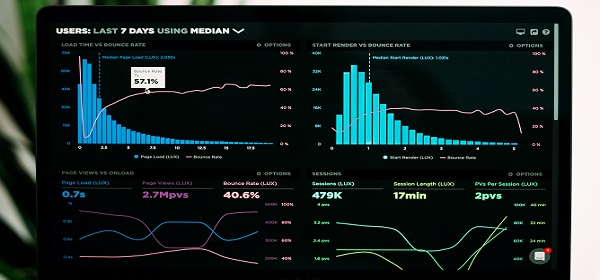
Digital signage network data analytics dashboard

The Network Effect: Why Signage Data Is Your Most Underused Asset

A mature digital signage network is a passive sensor grid that most operators never mine. Every impression logged, every dwell-time captured, every playlist variation tested is a data point with latent value. Feed that corpus into an analytics layer and the questions become interesting fast: which creative formats drive the most measurable lift? Which display locations are invisible to the audience they're meant to reach? Which content categories correlate with basket size in QSR? The brands winning with signage in 2026 aren't just broadcasting — they're running a closed-loop experiment at every location, every hour.

Predictive maintenance monitoring for signage networks

Predictive Maintenance: How AI Keeps Signage Networks Running Silently

A dark screen at a flagship location isn't an IT problem — it's a brand problem. Traditional break-fix maintenance cycles mean the issue is already visible before anyone responds. AI-driven monitoring flips that timeline. By training models on telemetry from media players, displays, and network gear, operators can surface anomaly patterns — thermal variance, packet loss spikes, brightness drift — days before a failure. Field teams dispatch proactively. The screen never goes dark. For large networks with thousands of endpoints, predictive maintenance isn't a luxury; it's the operational baseline that makes scale possible.

Agentic AI autonomously managing a signage network

Agentic Signage: When the Network Manages Itself

The next frontier in digital signage isn't a better CMS — it's no CMS at all. Agentic AI systems can be given an objective ("maximize upsell attachment rate during the 11am–2pm window") and autonomously run A/B tests, analyze results, rotate creative, adjust scheduling, and report outcomes — all without a human in the loop. This isn't science fiction; early deployments in QSR and retail are already proving the model. The role of the signage operator shifts from content manager to objective-setter and guardrail-builder. The network becomes a team member that works every shift.

Multi-stakeholder A/V sales committee meeting

The Committee Problem: Selling A/V When Everyone Has a Veto

A/V deals rarely die at the technical evaluation — they die in the conference room when procurement, IT, facilities, and the end-user sponsor can't agree. Each stakeholder applies a different lens: IT wants cybersecurity compliance and network segmentation, facilities wants installation simplicity and minimal structural impact, procurement wants the lowest unit price, and the end user wants the experience they saw at the trade show. The integrator who wins isn't always the one with the best product; it's the one who can map a single solution to four different definitions of success and keep all four stakeholders moving in the same direction.

Value selling versus price competition in A/V

Selling on Value When the Customer Only Sees Price

Commoditization has hit A/V hard. When a buyer can source a commercial display from three integrators, a broadline distributor, and Amazon on the same afternoon, the product itself stops being the differentiator. The reps who escape the price trap shift the conversation upstream — from line-item cost to total cost of ownership, from hardware specs to deployment risk, from product to outcome. That means arriving at the meeting with a TCO model, reference stories from comparable installs, and a clear articulation of what goes wrong when the cheapest option wins. Price objections are almost always symptom; the underlying disease is a value proposition that hasn't been made concrete enough for the buyer to defend internally.

IT department taking over A/V buying decisions

When IT Takes Over the A/V Budget: How the Buying Process Changed

A decade ago, A/V decisions lived in facilities or the executive suite. Today they route through IT — and that changes everything about how a deal gets sold. IT buyers evaluate A/V infrastructure through the same lens as any other networked system: uptime SLAs, patch management, zero-trust compatibility, vendor security posture, and long-term support commitments. The integrators still selling on picture quality and form factor to an IT director are losing before the demo starts. Winning in this environment requires fluency in network architecture, a willingness to engage in security reviews, and service agreements that look more like SaaS contracts than installation warranties.

A/V integrator transitioning to recurring managed services

The Recurring Revenue Pivot: Why A/V Integrators Are Struggling to Sell Services

Every A/V integrator knows recurring revenue is the goal — predictable income, higher margins, stickier customer relationships. The problem is that most integrators built their sales motion around project-based work, and their customers built their budgets around capital expenditure. Pivoting to managed services means retraining buyers who are used to owning gear to instead pay for outcomes, and retraining sales teams who are used to closing projects to instead build annuity pipelines. The integrators making it work have done two things well: they've bundled services tightly enough around hardware that the customer can't easily unbundle them at renewal, and they've built dashboards that make the value of ongoing management visible rather than invisible.

Core Topics

DS

Digital Signage

Network strategy, hardware selection, CMS architecture, and deployment at scale.

AI

Artificial Intelligence

Generative models, computer vision, real-time inference, and LLM-powered workflows.

DA

Data & Analytics

Audience measurement, attribution modeling, and closing the signage feedback loop.

OP

Network Operations

Monitoring, predictive maintenance, and managing thousands of endpoints reliably.

AV

A/V Sales

Multi-stakeholder deals, value selling, IT buyer dynamics, and the shift to managed services.

About

The perspectives on this site come from 20 years of selling, building, and operating across the full A/V and digital signage stack — managing enterprise accounts for Fortune 500 clients across corporate, hospitality, retail, and healthcare verticals, and growing long-term customer relationships that have spanned years and multiple contract cycles.

The work has always been sales-led: owning opportunities from prospecting through close, designing solutions across 15+ platforms including Appspace, Carousel, Navori, BrightSign, 22Miles, Scala, and Visix, and presenting at the C-level in competitive situations. The operator background — running national networks, managing vendor relationships, and owning P&L — means the customer conversations go deeper than a typical sales engagement.

The current focus is the intersection of AI and A/V: how generative models, agentic systems, and real-time data are reshaping how spaces communicate — and what that means for the integrators, operators, and buyers navigating it.

Contact

Reach out — I'm always happy to connect.